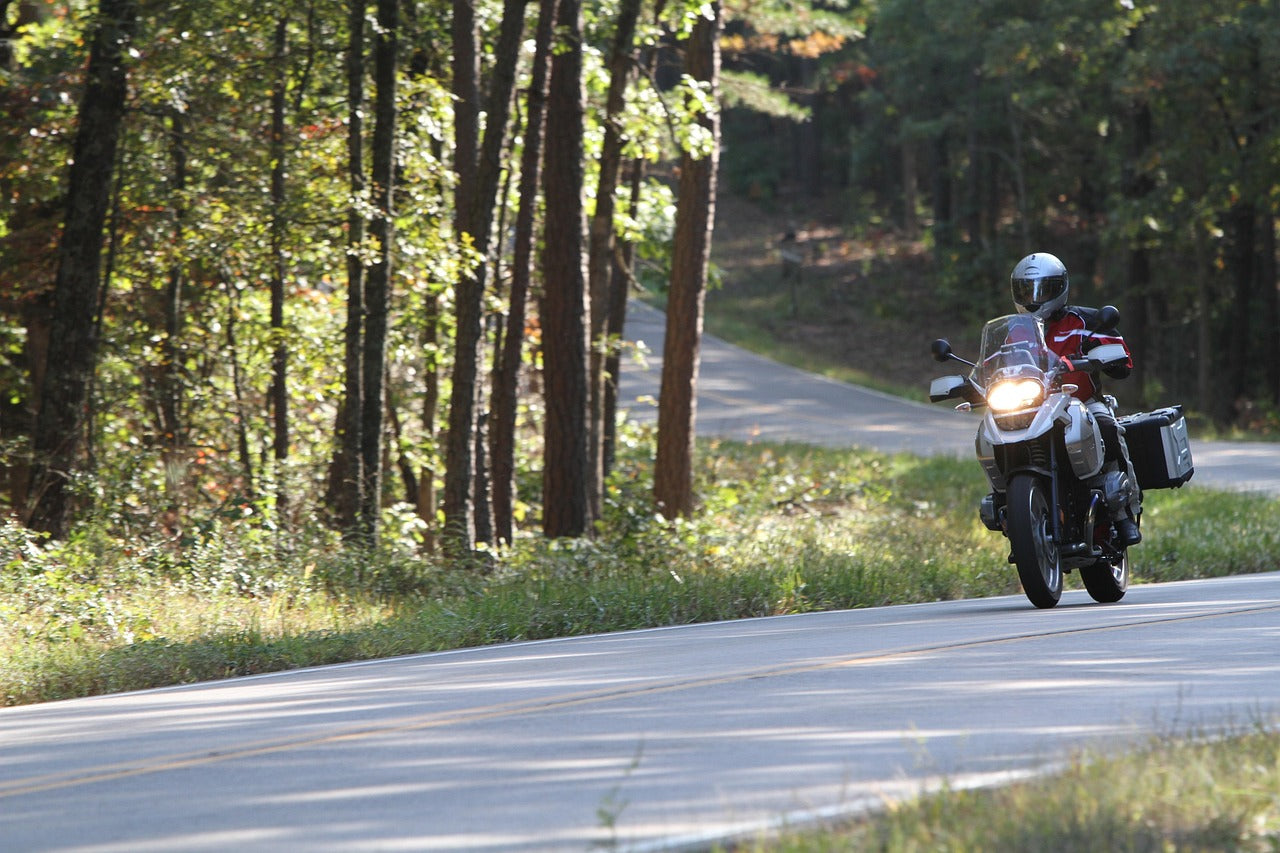
If you have ever ridden a BMW R1250 GS, you know why it has been an icon among adventure motorcycles for years. It combines reliability, comfort, and off-road capability in a way that excites many riders. With the R1300 GS, BMW has now introduced the next generation, improved in many areas—from chassis and electronics to ergonomics.
1. Engine and Responsiveness
R1250 GS: When you sit on the R1250 GS, you immediately feel the classic character of the boxer engine. The torque is smooth and predictable—especially at slow speeds off-road or when overtaking on country roads. You can precisely control the GS with gentle throttle inputs without it reacting abruptly. This makes it particularly comfortable for many riders when covering long distances or handling technical sections.
Another point you notice as a rider is how the engine runs with low vibrations. You sit relaxed even after several hours, and your wrist is not unnecessarily strained. The classic ABS Pro ensures you feel safe even on wet roads or gravel without constant intervention.
R1300 GS: The R1300 GS offers a slightly larger engine and noticeably more torque in the mid-range. As a rider, you feel it is more confident on long straights or when heavily loaded—the motorcycle simply feels more stable. The throttle response is even more finely tuned, which is especially pleasant when cornering on mountain roads or maneuvering carefully off-road.
Furthermore, BMW has improved the electronics. Cornering control, traction control, and ABS are even more precisely coordinated. For you, this means you can focus more on the road and surroundings without having to worry too much about the motorcycle itself.
2. Weight, Center of Gravity, and Handling
R1250 GS: The R1250 GS weighs about 249 kg ready to ride. You feel the weight especially when maneuvering at a standstill, but once you are riding, the mass is well distributed. It is stable on winding country roads, and you can approach corners tightly without it feeling sluggish.
One detail you quickly notice as a rider is the balanced handling when loaded. Even with a tank bag or side cases, the GS remains easy to control. This is especially important when riding off-road or on narrow mountain passes.
R1300 GS: The R1300 GS is slightly heavier, about 251 kg ready to ride. You hardly notice this while riding—in fact, you will perceive the difference as a plus in stability, especially at higher speeds or in strong crosswinds.
What you notice as a rider is the slightly different center of gravity. It is lower, which makes the bike feel more confident on rough roads or during fast cornering. If you plan long tours or carry a lot of luggage, you will appreciate this advantage as the GS reacts more calmly to the terrain.
3. Chassis, Suspension, and Comfort
R1250 GS: The R1250 GS offers 190 mm of suspension travel at the front and 200 mm at the rear. As a rider, you notice the balanced setup: unevenness on country roads is reliably absorbed, and you feel small bumps off-road, but they don’t disturb you.
The seating position is neutral and allows you to ride for long hours without much fatigue. Your back is relieved, your knees are slightly bent, and you have enough freedom of movement to control the motorcycle in difficult sections.
R1300 GS: The R1300 GS features a more modern chassis with slightly more suspension travel. You will immediately notice that bumps are absorbed even more smoothly, both on asphalt and light terrain. The seating position is more ergonomic, the handlebars feel more comfortable, and vibrations are better dampened.
For you, this means longer rides are more relaxed, and you don’t tire as quickly. This is especially relevant if you carry additional equipment or luggage, as the suspension compensates for the load better.
4. Electronics and Rider Assistance Systems
This is where the difference between the R1250 GS and R1300 GS becomes particularly clear, without needing to rely on numbers.
R1250 GS: You benefit from ABS Pro, adaptive traction control, and cornering lights. This is more than sufficient for most situations on road and light terrain. As a rider, you only need to make minimal adjustments to ride safely.
R1300 GS: The new electronic control adapts even better to the riding situation. You feel as a rider that cornering, different loads, or changing surfaces are balanced more finely. This creates more confidence in critical situations without requiring your intervention.
5. Customization and Accessory Potential from a Rider’s Perspective
If you want to customize your motorcycle individually, both models have a lot to offer.
R1250 GS: You can easily mount crash bars, luggage racks, auxiliary lighting, and comfort upgrades. Installation is usually straightforward, and you can quickly try out changes.
R1300 GS: Compatible with a wide range of accessories but requires a bit more planning and patience during installation. The advantage for you: after installation, you benefit from more stable mounting, better ergonomics, and higher safety.
From a rider’s perspective, you decide: do you want quick, uncomplicated modifications, or are you willing to invest more effort to benefit long-term from optimized technology and stability?
6. Long-Distance and Off-Road Experiences
R1250 GS: Ideal for tours lasting several hours. You sit neutrally, have a good overview, and the motorcycle reacts predictably. You can maneuver easily in light off-road conditions.
R1300 GS: On long rides, you feel the advantages of the new chassis and optimized ergonomics. Even more demanding off-road sections become more comfortable as the motorcycle lies more stable and absorbs unevenness better.
You will notice that the differences are subtle but noticeable—especially on tours lasting several days or on varying terrain.
7. Summary
For you as a rider, the comparison means:
R1250 GS: Agile, straightforward, reliable. Ideal if you want to set off quickly and value classic handling.
R1300 GS: More comfortable, stable, technically modern. Perfect for longer tours, heavier loads, and off-road use where you value ergonomics and electronic assistance systems.
Both motorcycles are excellent adventure bikes. Your choice ultimately depends on your riding style, tour plans, and priorities regarding comfort and technology.